(11) - Arizona at Carolina. The matchup between the Cardinals and Panthers is the perfect example of two teams headed in different directions. The Cardinals have had injuries at the quarterback position wreck their season. The Cardinals were 6-0 under Carson Palmer and averaged 26 points per game. Under Drew Stanton, the Cardinals were 4-1 and averaged nearly 23 points per game. But under 3rd stringer Ryan Lindley, the team 1-2 and averaging 11 points per game. The Panthers finished December 4-0 and gave up just 11 points per game.
(9) – Baltimore at Pittsburgh. The Steelers have put their success or failure entirely on QB Ben Roethlisberger, and he’s rewarded them. Big Ben threw for nearly 5,000 yards and 32 touchdown passes. Both of those were career highs. But here is where Roethlisberger was incredible: he took care of the football at a historic level. Roethlisberger became only the 2nd QB in the history of the game to have at least 600 passing attempts but didn’t reach double digits in interceptions. Tom Brady in 2012 is the only other player to accomplish this. The Steelers have a simple formula right now; let Big Ben win the football game by throwing the ball. With Leveon Bell out, it’ll be all on him again.
(4) – Cincinnati at Indianapolis. The Colts are on the upward arch where the team continues to have very good regular seasons but have not gotten good enough as of yet to take down the teams with elite veteran quarterbacks. Take a look at the Colts regular season in which they won 11 games. Four of their five losses came to teams quarterbacked by Tom Brady, Peyton Manning, Ben Roethlisberger and Tony Romo. Last year Brady knocked them out of the playoffs, the year before it was eventual Super Bowl MVP Joe Flacco. This week Andy Dalton and the Bengals come into Indy with receiver AJ Green doubtful for the game. The Colts should advance, and get a crack at another matchup with Brady or Manning.
(11-1) – Detroit at Dallas. Teams change over the course of an NFL Season. There was a time in October when the Seattle Seahawks were just 3-3 on the season. Another team that continues to change is the Dallas Cowboys. After week 2 of the NFL season in which Cowboys QB Tony Romo didn’t look healthy, the team and Romo decided to try a different approach to his prep. Since week 3 of the season, Dallas has held Romo out of practice and allowed him to spend the day focusing on a workout regimen for his surgically repaired back. That rehab work has been huge for Romo to feel healthy and prepared for each start.
Since this change was made to Romo’s prep schedule, he has rewarded Dallas with an 11-1 record with a full prep week schedule.
Blog
The 2015 Improved Falcons Defense?
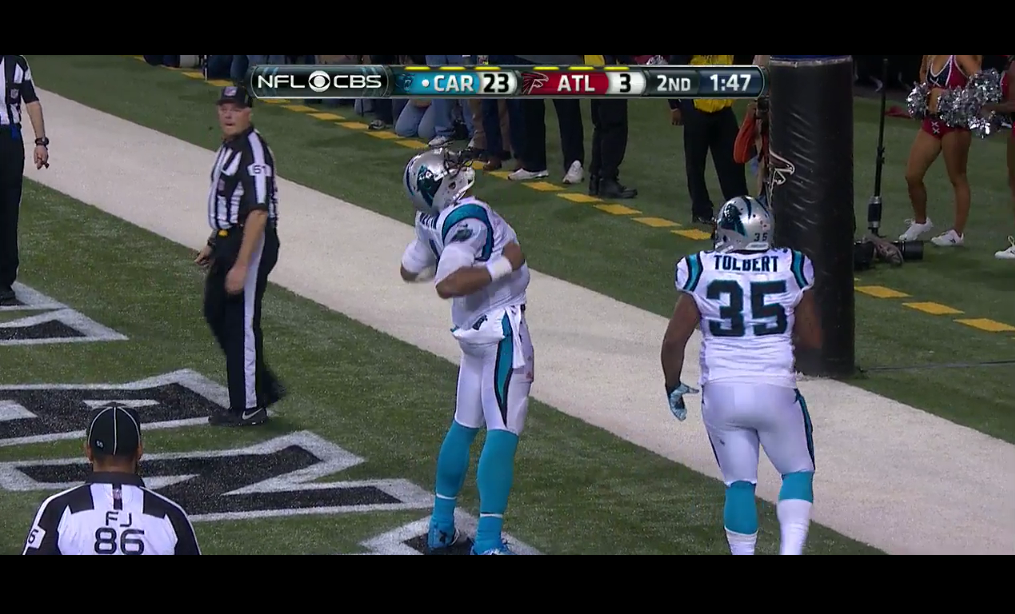
Cam Newton TD Score - CBS Sports
I have good news and bad news for Atlanta Falcons fans.
Let’s start with the bad news. As the Falcons coaching search continues, a point of emphasis with each candidate has to be a vision for improving the worst defense in the NFL. The Falcons were 32nd in the NFL in total defense. That’s dead last. They were also 32nd in the league in 3rd down defense. The team was also among the worst in the league at sacking quarterbacks as they were tied for 30th in the league.
As previously stated, that’s the bad news. Falcons fans are more than aware of their team’s struggles on this side of the ball.
Now for the good news that should provide some optimism for Atlanta moving forward. Recent history in the NFL has demonstrated that teams have been able to drastically improve their defenses from one season to the next. The same can not be said for offense as quarterback play often dictates the offense's production. But on defense, making a few smart additions in the draft and in NFL free agency can alter the future outcomes.
Let’s take a look at the worst teams in total defenses in the NFL over the past five seasons and examine what occurred. Each team was able to improve their ranking significantly the next season.
- 2013: Dallas 32nd 2014: 19th
Additions: MLB Rolando McClain (trade) – DT Henry Melton (FA) – LB Anthony Hichens (draft) – DT Tyrone Crawford (injury return) – DE DeMarcus Lawrence (draft)
- 2012: New Orleans 32nd 2013: 4th
Additions: DC Rob Ryan - CB Keenan Lewis (FA) – S Kenny Vaccaro (draft) – DT John Jenkins (draft)
- 2011: Green Bay 32nd 2012: 11th
Additions: OLB Nick Perry (draft) – DT Jerel Worthy (draft) – CB Casey Heyward (draft)
- 2010: Denver 32nd 2011: 20th
Additions: HC John Fox - LB Von Miller (draft) – S Rahim Moore (draft) – CB Chris Harris (rookie FA)
- 2009: Detroit 32nd 2010: 21st
Additions: DT Ndamukong Suh (draft) – DE Kyle Vanden Bosch (FA) – DT Corey Williams (trade) - CB Chris Houston (trade) - DE Willie Young (draft)
History demonstrates that if a team makes a commitment to get better defensively they can do so. While I noted the defensive additions in this exercise, there are ways in which an organization can make changes to their offensive style in order to help and protect their defense.
The 2014 Cowboys are not significantly better in defensive talent. But an organizational shift that moved away from explosive passing to running the football changed their time of possession numbers. In 2013, the Cowboys were ranked 26th in time of possession. With their improved running game, the 2014 Cowboys were ranked 1st in the NFL in the time of possession category. Holding onto the football means less plays for a vulnerable defense to deal with.
Once the Falcons have their new head coach in place, the improvement of the defense must be the first and primary topic he speaks of during his introductory press conference. If the next head coach also brings up that the Falcons organization must shift offensively, than the chances for this defense to improve becomes significantly better.
Todd Granthan 2013 vs 2014: By The Numbers
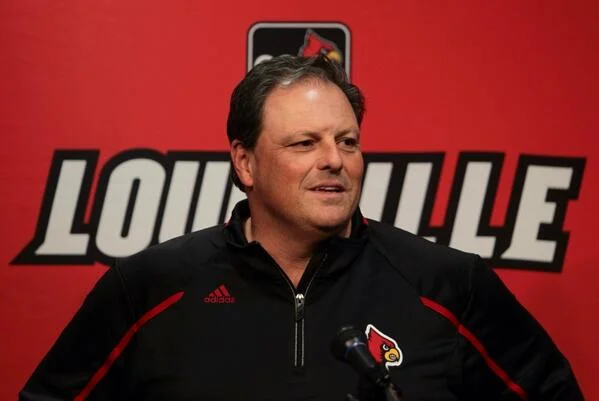
The Belk Bowl: it might as well be referred to as the Todd Grantham Bowl. If there was ever a way in which Louisville coach Bobby Petrino would take a back seat storyline wise in the city of Atlanta, it could only be done by the presence of former Georgia defensive coordinator Todd Grantham.
Earlier this week, Grantham took credit for helping “put Georgia back on the map.” For those of you who ever listened to 680 College Game Day during the 2013 season, you may remember that I was not a fan of Todd Grantham. In fact, I believe he is a clown that is eventually destructive to any defensive goals your team may have. Grantham is a coordinator, not a teacher, and his defenses at Georgia were often defined by a lack of understanding.
You can blame the students, I’ll blame the professor.
The Georgia defense was greatly improved in 2014 due to Todd Grantham being elsewhere. Some people get caught up in pointing to the amount of turnovers forced by the Bulldogs over the course of the 2014 season. Turnovers are fickle, as they don’t tend to show up from season to season despite the talent of your defense. For example, Alabama was 82nd in the country this year in turnovers forced per game. They were 96th and 20th in the country in 2013 and 2012 respectively.
Let’s take a look at a few simple measures of defense:
Points per Game: 21.3 (2014) vs. 29.0 (2013)
Opposing Passer Rating: 106.36 (2014) vs. 134.75 (2013)
Rushing Yards Allowed: 2,107 (2014) vs. 1,926 (2013)
You’ll notice the obvious improvement in points per game. A nearly eight point improvement from Grantham’s final year is considerable considering the lack of depth with the Bulldogs defense. The defense improved across the board with the exception of rushing yards allowed.
But let’s look a little deeper:
Penalties: 60 for 543 yards (2014) vs. 83 for 624 yards (2013)
Yards per Play: 4.8 (2014) vs. 5.4 (2013)
The Georgia defense was much more disciplined in 2014. Penalties can be attributed to discipline, a lack of talent, effort, etc. In this case, the defense committed 23 fewer penalties in 2014 while also allowing fewer points per game and yards per play. All of this while also losing talented players in the secondary to transfer and discipline.
The final pair of numbers I wish to point out to you is what made Bulldog fans in 2013 crazy with their defense. The lasting vision I have of the 2013 defense is the numerous times the group was confused and allowed a big play. Football Outsiders keeps track of a couple of statistics that I find amazing. They’re called explosive drives and methodical drives.
An explosive drive is considered one in which the offense averages 10 yards per play. Such as a drive that goes: 4 plays, 60 yards and a touchdown. A methodical drive is one in which the offense runs at least 10 plays. Here is how Georgia ranked in 2014 vs. 2013:
Explosive Drives Allowed: 17th (2014) vs. 81st (2013)
Methodical Drives Allowed: 87th (2014) vs. 104th (2013)
But the story of Todd Gratham doesn’t end there. Because remember, a bad teacher doesn’t improve no matter what school he moves to. Here’s a look at the Louisville defense from 2013 to 2014. While the school moved into the ACC, eight of the conference’s teams finished in the bottom half of college football in points per game scored.
Points per Game: 20.5 (2014) vs. 12.2 (2013)
Opposing Passer Rating: 103.91 (2014) vs. 99.17 (2013)
Rushing Yards Allowed: 1,124 (2014) vs. 1,049 (2013)
Penalties: 61 for 535 yards (2014) vs. 43 for 396 yards (2013)
Yards per Play: 4.58 (2014) vs. 4.2 (2013)
Explosive Drives Allowed: 26th (2014) vs. 16th (2013)
Methodical Drives Allowed: 8th (2014) vs. 88th (2013)